Much ink, digital and otherwise, has been spilled lamenting the state of EV charging infrastructure. While its true, as EV’s go main stream, we will need faster and better DC quick charging infrastructure, there is much more to this. Slower Level 2 (L2) AC charging can be done just about anywhere. Think of all the power outlets scattered around Ontario, electricity is truly everywhere, we just need a series of adapters to charge. Lets dive in and discuss how to best equip your EV to maximize your charging experience.
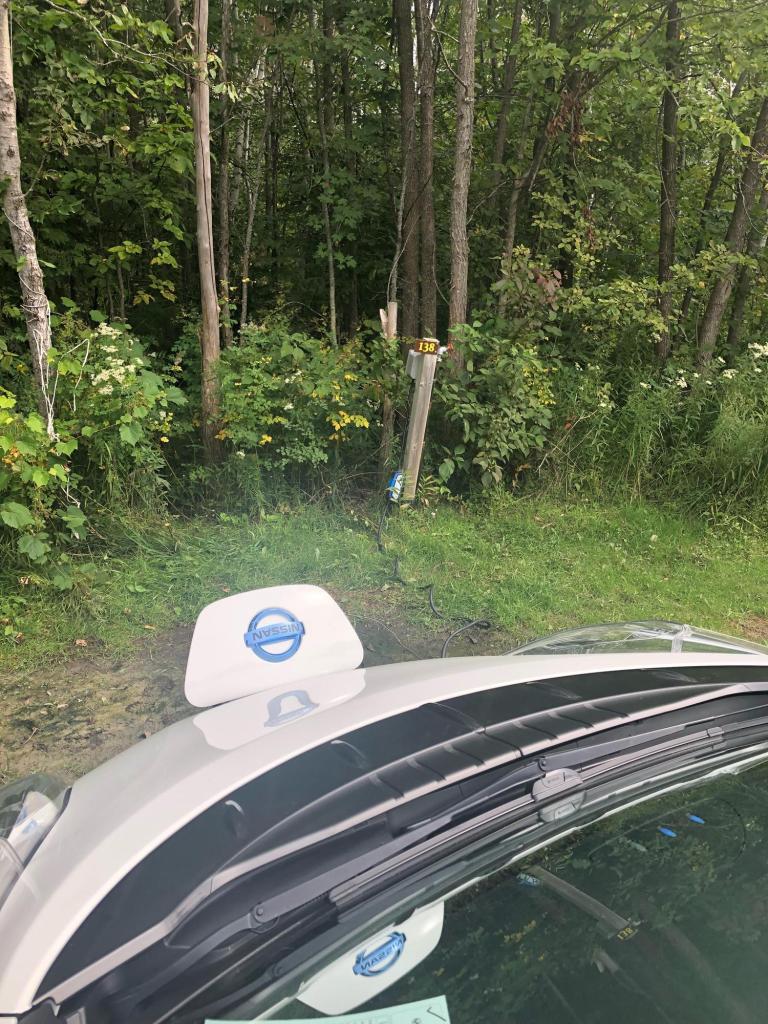
Electricity is everywhere, the humble 120 V outlet is found just about anywhere. Campgrounds abound with higher power TT-30 and NEMA-14-50 outlets that can be used to charge your car. Further, portable solar systems can be used to charge EV’s (albeit slowly, https://www.bluettipower.com/blogs/news/portable-solar-panel-for-electric-car source). Note that we will restrict our discussion to Level 2 EV charging, briefly using adapters to convert an electrical outlet (perhaps a high power one) into something that can charge your car overnight. Higher power L3 connectors are much more challenging to install and handle, something beyond what can be handled safely with adapters. So we limit our discussion to Level 2 AC charging at speeds of less than 10 kW.
| Source | Power | Charge time, 24 kWh | Charge time 40 kWh | Charge time 60 kWh | Charge time 100 kWh |
| Wall outlet | 1.5 kW | 16 hours | 27 hours | 2 days | 3 days |
| TT-30 — RV 30 A service | 3 kW | 8 hours | 14 hours | 20 hours | 34 hours |
| NEMA 14-50 — RV 50 A outlet | 10 kW | 3 hours | 5 hours | 7 hours | 11 hours |
| NEMA 14-30 — Dryer outlet | 6 kW | 4 hours | 8 hours | 11 hours | 17 hours |
Lets start with the car end. Here in North America, most EV’s either have a J-1772 plug on them, or at least ship with an adapter to allow you to use a J-1772 plug. Most cars can L2 charge at 6-7 kW, both my 2015 and 2018 Nissan Leaf’s can L2 charge at 6.7 kW for example. Some newer cars can go up to and beyond 10 kW. Plugin Hybrids typically have lower charging speeds as their batteries are smaller. Whatever car you have, be sure to know what it’s supported charging speeds are.
A word on electrical safety is in order. I am no electrician, so you should always consult a licensed electrician in your area. Electrical circuits aim to provide power at a fixed voltage, up to a maximum current. For example, my house has several 120 V outlets, rated at 15-20 Amps. I could use these to charge my car, but only up to about 80% of the maximum rated current. Thus whatever charging setup you fashion, you need to have some way to limit the charging current based on the limits of the circuit you are plugging into. This is important as if you charge at 16 A on a 15 A circuit, at best, you will trip the fuse, or worse, start an electrical fire.
Your car might even have shipped with a J-1772 to 120 V adapter. This is a pretty good start, the 120 V plug is everywhere. An overnight charge can get you 20-30 KWh, if not enough to fill the battery, certainly enough for a good top-up. Be sure to consult the documentation that came with your car, typically these “granny-leads” are limited to 12 A, and thus can be plugged into most grounded outlet’s provided nothing else is on that circuit. I used the one that came with my 2015 Nissan Leaf all over Ontario, and it usually charged without any issues.
To allow for higher power L2 chargers, I use this charging station, which allows you to adjust the maximum current between 8, !0, 13A, 16 or 32 A. This together with a series of adapters from AC works (source) allow me to plug into a 120 V outlet, TT-30, NEMA 14-50 or NEMA 14-30 depending on the situation I find myself in.
 Electric car adventures
2 thoughts on “How to charge anywhere”