During icing conditions, heat-pumps have to de-ice themselves to keep heating your home. This is something that does happen, from time to time, but most heat-pumps have the ability to briefly de-ice themselves (running in AC mode usually) which melts the ice in a few minutes, giving it the ability to keep heating your home even when its snowing outside. There are some losses involved, but rest assured, your heat-pump will keep working when the mercury drops, mine has kept our home warm all winter, although there was a day or two when it got below -15C and the gas took over.
Icing requires two conditions, some moisture to ice up, and temperatures cold enough to cause it to do so. There is an increasing link between temperature and the amount of water the atmosphere can hold. The warmer it gets the more moisture can be held in the atmosphere.
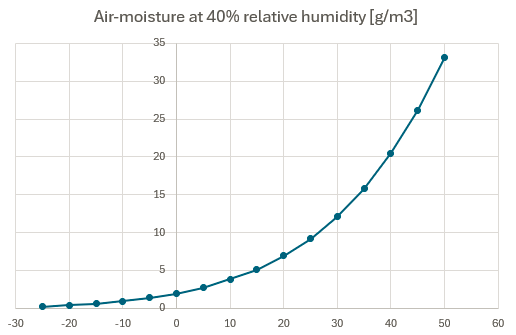
Thus, as the temperature gets colder, we run out of that first ingredient in icing, namely water. In aviation for example, the highest risk of icing is found at temperatures just below 0C, high risk is generally 0 to -15C, and low risk -15 to -40C (source). Granted aircraft icing gets a little tricky, as say the wing can get “cold-soaked” under certain conditions, while our heat-pump generally sits at a similar temperature as its environment. Nevertheless, our cold-source heat-pump needs some way to deal with ice. A common approach is to briefly run it in air conditioner (AC) mode, which heats up the outside unit letting the ice melt (source).

Keep an eye on your heat-pump when its snowing or temperatures are hovering around 0C. If the heat-pump does not de-ice itself with a few hours, there might be a way to manually force a de-frost cycle. If that fails, you should contact an HVAC specialist.
 Electric car adventures