A common complaint when it comes to funding the EV charging network, is that just like gas it should pay for it self and be left to the private sector. The fallacy here is that well, gas retail sales are not really profitable. In fact there is usually a convenience store onsite where the profits are made (source). EV charging profit wise is no different, with most of the money made inside the store.
Indeed, at a recent charging stop, once the charging was underway, we noticed a lovely international store, who knew there was such a thing as hand rolled butter? Well, having sent my wife into the store while I walked the dog, I now know.
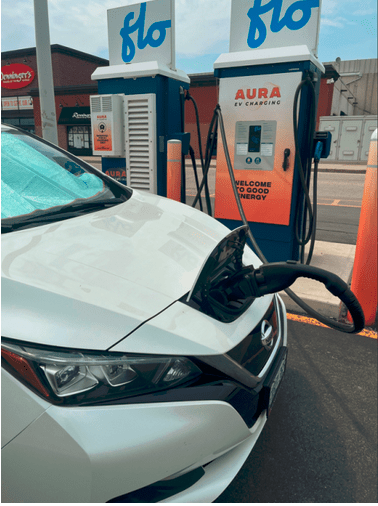
Briefly, charging stop, or lets be honest the shopping excursion, came to a grand total of $155, of which $150 (~ 96% of total expenditures) was spent on such fine products as hand rolled butter.
As a whole, the complex that hosted the charging station could and perhaps should spend to keep the charging stations going. So far, charging stations have been funded through a mix of network fees (I did pay said $5 for the charging), taxpayer funds and site host fees (the aforementioned shopping centre which got 96% of my money).
Of course, not every charging stop has to involve hand rolled butter, but many involve food, snacks, or other life essentials. For a business to consumer company (such as the purveyor of said hand rolled butter), 10-30 % is often spent on marketing (source). In my $150 situation, that would correspond to $15-45, why that is 3-9 fold my actual charging expenditure of $5.
As with gas, spending some private money on charging is a prudent business decision. Even better, since charging stations are much cheaper to build than gas stations (a few tens of thousands of dollars would get you several L2 stations, which is a lot better than the millions required for gas pumps (source)). Thus I suspect the marketing budget can take a few grand to put in some charging at more shopping malls.
 Electric car adventures