To extend the life of your EV battery, most EV manufacturers do not allow you to use the full rated capacity of your battery. For example, my 2018 Nissan Leaf is usually at about 36 kWh usable, which dips down to about 34 kWh when it gets really cold. In my leaf, this appears to be linked to battery temperature, hence on cold days, an extra2 kWh can be accessed by carefully managing your battery temperature.
A note of caution: Before we begin, lets be honest, 2 kWh is not a whole lot of charge (at 6 km/kWh its only 12 km of range), and Nissan put this in place to protect your battery. Ask yourself if that extra 2 kWh is really going to make a difference.
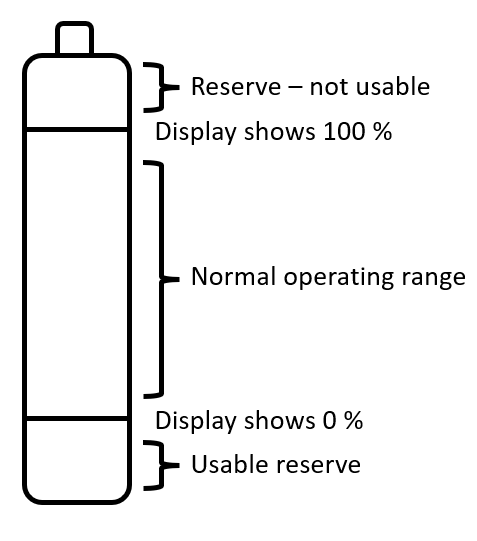
Accessing the top reserve is relatively simple, we just need to ensure that the battery temperature is somewhere between 5-25 C. If you have access to a heated garage, then this is relatively easy. If not, you can warm the battery by fast charging or if its a hot day, wait until evening to charge your car. The climate control timer also offers a way to “warm-things-up”.
For example, when I returned from a recent ski-trip, I stopped at a fast-charger in Barrie, which warmed up the battery enough so that when I got home and started to charge my 2018 Leaf, it charged up to what seemed “slightly-more-than-full”, namely 36 kWh instead of the 34 kWh it would have on a rather cold February Monday.

