Mr. Trumps middle-east adventures continue at the time of this writing in July of 2026. It is quite the drama, but setting all this aside, what is remarkable is the absence of “crazy-high-gas-prices”. Particularly given that several of the worlds large oil producers are under strain. Something is different this time around, compared to historical middle east crisis.
Rewind back to the 1970’s, following some US adventures in the middle east, most notably US support to Israel, the Organisation of Petroleum Exporting Countries (OPEC) decided not to sell oil to the US, and some of its allies, and later the Iranian revolution took about 10% of world oil production off line (source). Both of these crisis caused long lines at gas stations, and reverberated through society, in ways that dampened oil production and demand throughout the 1980’s (source).
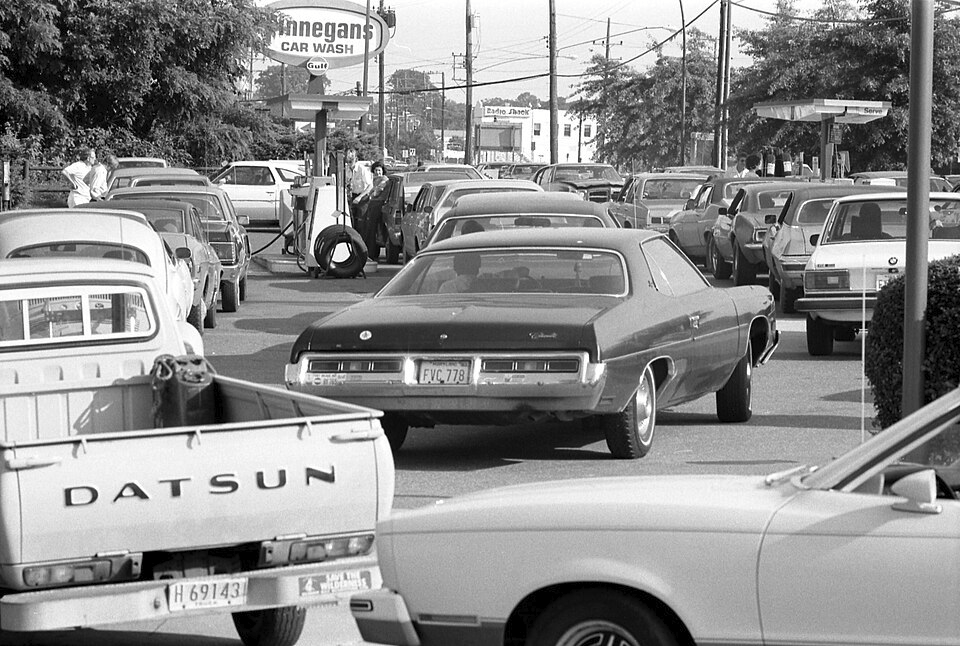
So if taking 10% of world’s oil production off line causes these long lines (as it did in the 1979), then why does taking 20% of world’s oil production off line in 2026 cause a small meh on the world stage? Sure gas-prices have gone up a little (see chart below), but by en large, there are no long lines at gas stations, fuel is generally available for those who need it, at a price that does not appear to be all that crazy given the past few years.
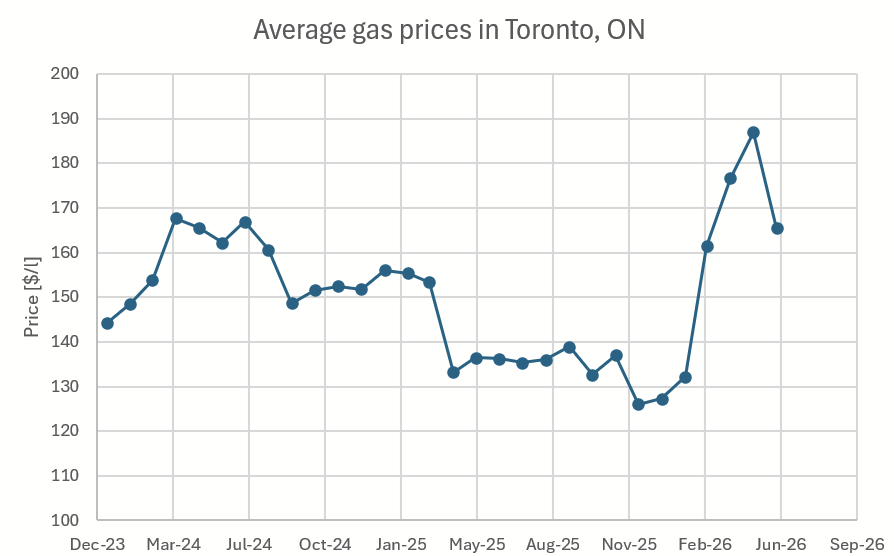
DOI: https://doi.org/10.25318/1810000101-eng
A lot has changed since the 1970’s. Many countries have some sort of petroleum reserve, covering perhaps 100 or so days of imports (source). China notably might have 1.4 B barrels stashed away (source), about 100 days or so of imports. When the latest adventure started back in February, China cut its imports by 40% almost overnight (source). That, plus the Saudi’s and UAE leveraging their by-pass pipeline capacity, might have balanced things out (source).
Then there are alternatives, some version of the Pakistani solar boom continues across the world (source), if one needs to grow electricity production, the cheapest/fastest/best way is often rooftop solar. Particularly since air conditioning is responsible for much of the increased electrical demand, solar is a great solution.
There is also the problem of time? Two arguments stand out: China can’t hold out forever, at some point they will need to resume at least some of their imports. Also, even if Hormuz opens up tomorrow, it will take many months to resume production (source). Both of these together suggest that there will be sustained upward pressure on oil prices well into the 2030’s, so get into that EV now.


One thought on “Where is the gas-price spike?”