Word broke earlier this year that a build your dreams (BYD) had developed a way to fast charge EVs in as little as 5 minutes. While undoubtedly an impressive feat of engineering, as an EV driver, I am not entirely convinced this is a good idea. Mostly because it forces a gas-station mentality on EVs, and has us all queueing and waiting for that one charger to become available, in the end, leaving EV drivers with more wait time.
1 MW charging is quite the feat of engineering. The voltages and currents involved means that isolation must be top notch and any resistance kept to a minimum. Cables need to be liquid cooled to manage the 1000 A currents flowing, not to mention the high voltage electronics needed to manage the grid connectivity for all that. I am truelly impressed by the engineering that went into this.
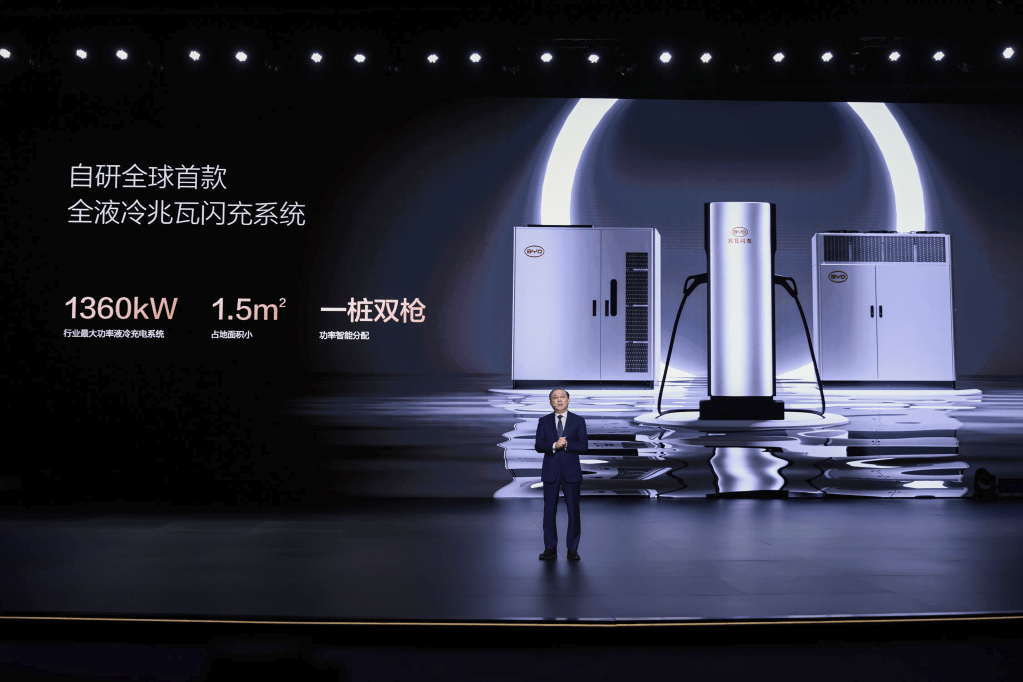
Also some context, 5 minute charging promisse, strictly speaking promisses to charge your (presumably) BYD EV from 10% to 70% in 5 minutes (source), and in practice might be like 13% -> 60%. So, not exactly 0%->100% in 5 minutes, but that is beside the point.
The real question is, would you like 10 100 kW chargers or ONE 1 MW charger?
Mostly as adding something like 1 MW load onto the grid is easier said than done. Sure connecting a 50 kW charging station seems relatively straight-forward, its about the same as a 200A residential service in terms of grid load, so easy peasy (source). Anything bigger may need some planning, which takes time, 1 MW certainly seems to fit that category. Still current charging networks, Lakeland, Flo, Tesla and more regularly announce new charging stations (source, source and source). This suggests that building out charging stations with connectivity at or below 1 MW is not too hard. Much depends on the exact site, I am sure there are sites where a few MW will not be a problem, but there are also plenty where that will be a problem.
Much of the commentary on online platforms reporting the amazing engineering that went into this, and how the west, once a leader in EV tech, might be loosing its edge (source). Some suggest that as say an apartment dweller without home charging, something like this would be great, and it might.
Back to the one 1MW charger vs 10 x 100 kW charger question. On a recent road trip, I plugged in, started charging and then went looking for a bathroom and a burger. It was near lunch-time and the burger joint was busy, 40 minutes later, I had enjoyed both my lunch and used the facilities and it was time to move on.
Had there been one 1 MW charger, I would have had to queue for it as there were 15 or so EVs that came and went during my lunch stop. Why that might be as much as an hour just to get onto the charger, and the worst part is, I am not able to do anything else with that time. I cant get a burger, and I cant use the washroom, I am stuck waiting in line. Not to different perhaps from a gas driver who might not know anything different.
There is a better way, plug in where you can, go live your life. Ill take 10 x 100 kW chargers over ONE 1MW charger any day, its just easier. Come to think of it, perhaps 20 x 50 kW chargers would be a better idea.
There are situations where 1MW charging is very helpful, take electric trucking for example, where battery packs stretch into the hundreds of kWh’s, its just not needed for cars and small trucks.
 Electric car adventures