The higher sticker price of EVs is a major turn-off for potential EV drivers. While “fuelling” is much cheaper in an EV, as is maintenance, that sticker price (and the associated higher insurance costs), kinda kills the “fuel” and maintenance gains. Here in Toronto Canada, we are enjoying a bit of a discount EV moment. Compared to other parts of the world, EV prices have dropped nicely, in anticipation of the arrival of Chinese EVs.
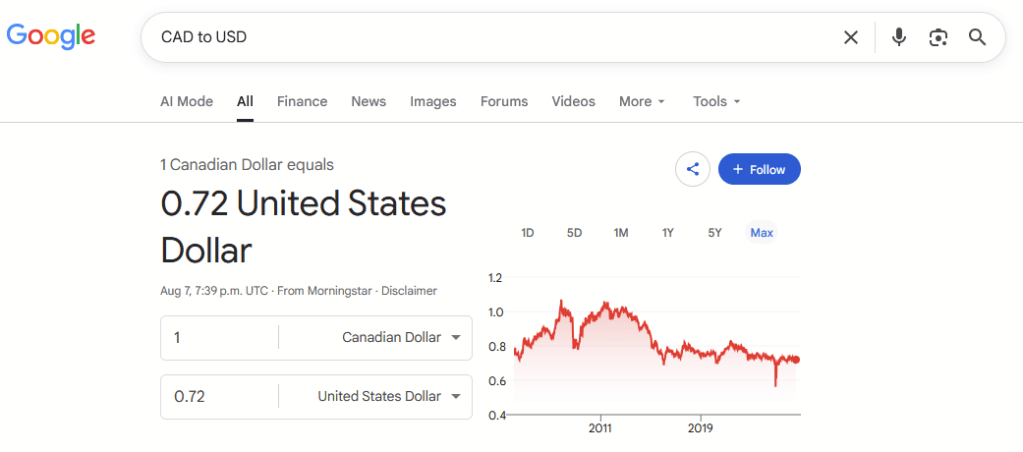
One of the wonders of our modern world is its connectedness. I can quite easily comparison shop. So, with that my dear reader, lets dive in and see what prices we get around the world, I have converted all prices to Canadian dollars, to make the comparison slightly more fair. Also, I went with the most basic version available in Canada, and tried to find something similar in other markets. I tried hardest to match the battery capacity, less so with other specs. I used google for currency conversion, relying on early August 2026 exchange rates.
| Brand | Canada | US | Germany | Australia |
| Tesla Model 3 RWD | $39 500 | $51 500 | $59 600 | $54 100 |
| Kia EV 4 Light | $36 300 | N/A | $60 000 | $52 200 |
| Chevy Bolt | $35 000 | $38 500 | N/A | N/A |
| Nissan Leaf + | $44 000 | $41 800 | $66 000 | N/A |
As we can see from the table above, 3 times out of 4, the cheapest price is right here in Canada. The fourth (Nissan Leaf), came close, mostly as I believe in the US market, Nissan is shooting for a sub 30k USD price tag, which pulls the US ahead slightly. I did include the 5k EVAP where eligible as that is the price listed on the manufacturers Canadian website. Sadly my high school German is not quite good enough to determine if the same is true on their German websites, while there is a similar program available, it is income linked (source), hence my sloppy journalism might be sufficient. Australia has varied programs, including favourable financing for EVs, with a $60k AUD (~$59 CAD) price cap, I did not see any income eligibility criteria in my brief search, although apparently one must attend a workshop (source).
It is refreshing to see that one can now get an EV in the 30k CAD range, something that would have taken at least 40k CAD before (source). That’s not to say there is not a gap, the Kia K4, the Kia EV4’s combustion cousin, can be had for 28k CAD, but it is nice to see that a new Canadian EV shopper has some choices in the 30-40k CAD price range. Interestingly enough, that same Tesla Model 3 retails in China for $48 600 CAD, assuming the Mandarin to English browser translation worked. That last point also suggests that once the much talked about Chinese EV’s arrive in Canada, price is unlikely to move much more than it already has.
Currency movements could explain some of this, the Canadian dollar is relatively cheap these days, for example looking at historical CAD to USD exchange rates suggest that the Loonie is near historic lows, similar story unfolds for CAD to EUR and CAD to AUD. But, historically, currency movements are similar now as they have been since the mid 2010’s when EVs started to hit the mainstream. I suspect the clever tariff free Chinese EV fine-print has more to do with it, as Canadian negotiators put a 35k CAD roof on the “landed-price”, for more favourable tariff treatment (source). Hence, you gotta have something in the 30-40k CAD range if you want to counter the Chinese…
Things could get cheaper yet. Several small EV’s such as the Renault 5, Kia EV 2, Hyundai Inster and more, are not available in Canada. While small combustion cars have not traditionally sold well in Canada, EVs owning to their better interior space utilisation (source), could change that, particularly as the price in Europe is perhaps 10k CAD cheaper than say the EV4, would you be tempted to get into a Renault 5, Kia EV 2, Hyundai Inster, or a Nissan Micra for 25k CAD?


One thought on “Cheaper EVs are here”